Summary Retool offers a flexible solution for developing internal applications quickly, utilizing a combination of pre-built components and custom code capabilities. Its extensive integration options make it suitable for diverse business needs, while its security features cater to enterprise-level requirements.

Retool
Retool is a low-code platform designed for building internal tools by connecting various data sources. Suitable for businesses needing rapid application development.
Community:
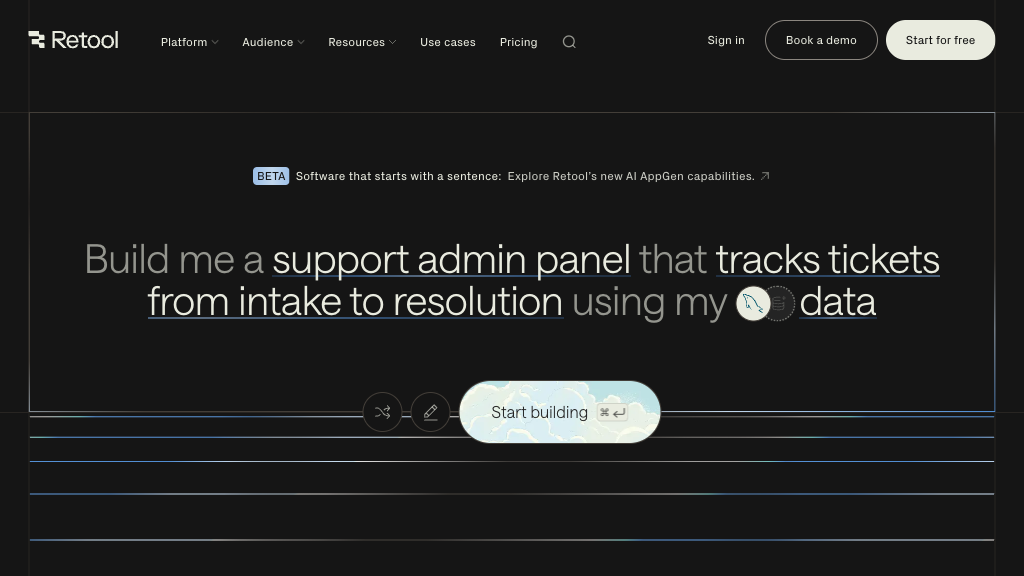
Retool - Reviews: User Feedback, Features, Pros & Cons
Key Features
- Drag-and-Drop Interface with Pre-Built Components: Simplifies frontend app construction with over 100 ready-made UI components.
- Extensive Data Source Integrations: Supports seamless connections to databases, APIs, and cloud storage.
- Custom Code Support: Enhances app logic and behavior using JavaScript, SQL, and Python.
- Enterprise-Grade Security and Governance: Offers SSO integration, role-based permissions, and audit logs.
Typical Use Cases
Admin Panels and Internal Dashboards
Create secure interfaces for teams to manage business processes efficiently.
Create secure interfaces for teams to manage business processes efficiently.
Customer Service Management
Streamline customer interactions by centralizing data and managing support tickets.
Streamline customer interactions by centralizing data and managing support tickets.
Inventory and Machine Management
Develop apps for real-time tracking of inventory and maintenance schedules.
Develop apps for real-time tracking of inventory and maintenance schedules.
Best For
- Startups (because they need rapid prototyping capabilities)
- Enterprises (because they require robust security measures)
- Developers (because they benefit from custom coding options)
Read More
Avoid
- Non-technical users without coding interest
- Organizations seeking purely out-of-the-box solutions
- Businesses not needing internal tool customization
Pricing Overview
The pricing structure of Retool varies depending on the deployment choice between cloud hosting or on-premises solutions, offering flexibility based on organizational needs.
FAQ
- What is Retool primarily used for?
Retool is used to quickly build custom internal tools like admin panels, dashboards, and workflow automations by connecting to various data sources. - Do I need coding skills to use Retool?
Basic apps can be built with drag-and-drop components, but Retool supports JavaScript, SQL, and Python for advanced customizations. - What data sources can Retool connect to?
Retool integrates with over 70 data sources including popular databases, REST APIs, and cloud storage services. - Is Retool secure for enterprise use?
Yes, it offers enterprise-grade security features such as SSO, role-based access control, audit logs, and SOC 2 Type II compliance. - Can Retool apps be deployed on-premises?
Yes, Retool supports both cloud hosting and self-hosted deployments for full infrastructure control. - How does Retool support workflow automation?
It allows scheduling and triggering workflows to automate data transformations, API calls, and system integrations. - What kind of support does Retool offer?
Retool provides account support, developer forums, live office hours, and enterprise support depending on the plan.
Verdict
Retool stands out as a versatile platform for building customized internal tools with ease. Its blend of no-code simplicity and advanced coding flexibility meets the needs of both developers and business users. While it excels in security features suitable for enterprises, those seeking simple out-of-the-box solutions might find it more than necessary. Overall, it's a robust choice for organizations looking to streamline their internal processes through tailored applications.
Retool Reviews
No reviews
Top Regions of Retool
🇺🇸United States:31.50%
🇮🇳India:8.82%
🇧🇷Brazil:4.99%
🇦🇺AU:4.12%
🇲🇽MX:3.76%
🌍Others:46.81%
Retool Traffic Trends
Monthly Visits: 1.66M